Home
» Apple
»
How to Fix “Wi‑Fi 7 Keeps Disconnecting” on iPhone 17 Pro
How to Fix “Wi‑Fi 7 Keeps Disconnecting” on iPhone 17 Pro
If your iPhone 17 Pro connects to a Wi‑Fi 7 router, works for a few minutes, then drops and reconnects, the important question is whether the problem is with the phone, the router, the 6 GHz band, or a network configuration that only affects this Wi‑Fi.
There is a useful new Apple troubleshooting option as of August 25, 2026. Apple now explicitly documents that supported iPhones on a Wi‑Fi 6E or Wi‑Fi 7 network can turn Wi‑Fi 6E mode off for that specific network. Doing so prevents the device from using that network’s 6 GHz band while leaving Wi‑Fi 6E/Wi‑Fi 7 behavior on other networks unchanged. This gives iPhone 17 Pro owners a targeted compatibility test instead of requiring a router-wide downgrade.
First: is the disconnect limited to one Wi‑Fi 7 network?
Before changing advanced settings, find out whether the iPhone disconnects everywhere or only on one router. Apple recommends checking whether other devices can use the same network and trying the iPhone on a different Wi‑Fi network.
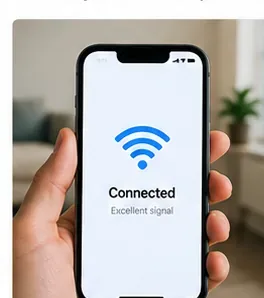
AI-generated illustration of checking that the iPhone is connected to the intended Wi‑Fi network. Interface details can vary by iOS version.
Use this quick interpretation:
Result
What it suggests
Only the iPhone 17 Pro disconnects on every Wi‑Fi network
Focus on iOS, VPN/security software, network settings, or the device itself.
Only this Wi‑Fi 7 router causes drops
Focus on 6 GHz compatibility, router firmware, SSID, security, channels, and access controls.
Every device loses connection
The router, modem, ISP, or wider network is the more likely problem.
The iPhone is stable on 5 GHz but unstable on the Wi‑Fi 7 network
Test the network’s 6 GHz behavior and router configuration.
AI-generated illustration of testing another network to separate an iPhone-wide issue from a router-specific issue.
1. Update iOS and the router firmware before deeper troubleshooting
Apple’s current Wi‑Fi troubleshooting instructions say to update the iPhone to the latest available iOS version. Router firmware also matters: Apple recommends keeping router firmware current and enabling automatic firmware updates when the router supports them.
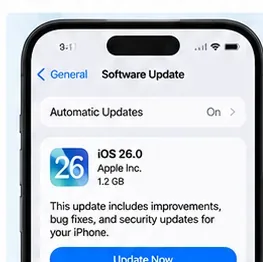
AI-generated illustration of checking Software Update on iPhone. Install the latest stable iOS release available for your device.
On iPhone, go to Settings > General > Software Update. For the router, use the manufacturer’s official administration app or web interface. If the router has just received a major Wi‑Fi 7 firmware upgrade, restart it after the update if the manufacturer instructs you to do so.
Do not assume an update guarantees a fix. The purpose of this step is to remove already-addressed compatibility and stability bugs before you spend time tuning the network manually.
2. Toggle Wi‑Fi, then restart the iPhone and router
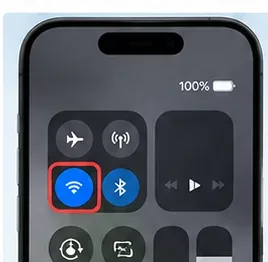
Turn Wi‑Fi off and back on, then test again. If the problem persists, restart the iPhone. Apple also recommends restarting the router and cable modem by unplugging them and plugging them back in.
AI-generated illustration of the Wi‑Fi control. A quick reconnect can clear a temporary connection state, but recurring drops need further diagnosis.
A restart is useful for temporary state problems; it is not evidence that the root cause has been removed. If the drop returns repeatedly, continue with the per-network checks below.
3. Forget the network and join it again
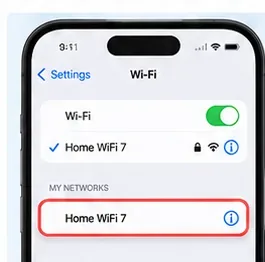
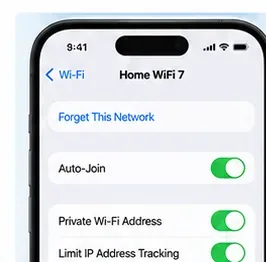
If the router settings changed recently—or if the saved Wi‑Fi profile is behaving unexpectedly—forget the network and rejoin it. Open Settings > Wi‑Fi, tap the information button next to the network, choose Forget This Network, then reconnect with the Wi‑Fi password.
AI-generated illustration of opening a Wi‑Fi network’s details before forgetting and rejoining it.
Apple notes that after router configuration changes, forgetting and rejoining can help the device adopt the router’s new settings. Be aware that forgetting the network also affects the private Wi‑Fi address state associated with that network under current iOS behavior.
4. If 6 GHz is unstable, turn off Wi‑Fi 6E mode for this network
This is the most Wi‑Fi‑7-specific test in Apple’s current guidance. When the iPhone 17 Pro is connected to a compatible Wi‑Fi 6E or Wi‑Fi 7 network, open Settings > Wi‑Fi, tap the network, then look for Wi‑Fi 6E Mode. Set it to Off.
AI-generated illustration of the per-network settings page where network-specific controls appear. The exact options shown depend on the network and iOS version.
Apple says that turning this mode off stops the iPhone from using that network’s 6 GHz band; 2.4 GHz and 5 GHz remain available. It does not disable Wi‑Fi 6E or Wi‑Fi 7 on other networks.
If the disconnects stop after this change, you have narrowed the issue to the 6 GHz path or a feature associated with that tri-band configuration. You can leave the per-network mode off for stability or investigate the router settings below and retest 6 GHz later.
The option only appears when a supported device is connected to an appropriate Wi‑Fi 6E or Wi‑Fi 7 network. If you do not see it, do not assume something is broken; the current connection or regional configuration may not expose 6 GHz.
5. Configure the Wi‑Fi 7 router the way Apple recommends
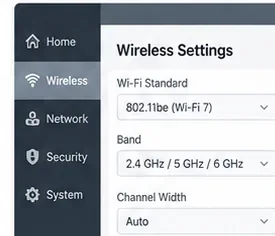
Router configuration is a common source of interoperability problems. Apple’s recommended settings are notably conservative: keep all supported bands enabled, use one SSID across bands, avoid deprecated security, and let the router choose channels automatically.
AI-generated illustration of generic router controls for Wi‑Fi standard, bands, and channel width. Use your router manufacturer’s actual interface and Apple’s recommended values.
For a home Wi‑Fi 7 router, check these settings:
SSID: Use one unique, case-sensitive network name across 2.4 GHz, 5 GHz, and 6 GHz. Apple warns that separate names can reduce reliability and can cause limited-compatibility behavior on Wi‑Fi 6E/7 networks.
Security: Prefer WPA3 Personal. Use WPA2/WPA3 Transitional when older devices require WPA2 compatibility. Avoid WEP, TKIP, WPA, and other deprecated modes.
Hidden SSID: Disable hidden-network mode.
MAC filtering: Disable MAC-address filtering/access control as a Wi‑Fi security mechanism. Apple recommends proper WPA security instead.
Firmware updates: Enable automatic router firmware updates when available.
Radio mode: Enable all appropriate modes rather than forcing a narrow legacy or single-standard subset.
Bands: Enable all bands supported by the router.
Channel: Set channel selection to Auto.
Channel width: Use 20 MHz on 2.4 GHz; use Auto or all supported widths on 5 GHz and 6 GHz.
These recommendations come from Apple’s recommended settings for Wi‑Fi routers and access points. Back up your router configuration before changing multiple settings, and change one group of settings at a time so you can identify what actually improves stability.
6. Check VPN and security software if the Wi‑Fi link looks connected but traffic stops
A Wi‑Fi problem is not always a radio disconnect. Apple documents that VPN and third-party security software can interfere with network connectivity, including internet access and communication with local devices.
If the software is not required or managed by your employer or school, test without it. Apple’s current general Wi‑Fi guidance recommends uninstalling VPN or security software for the test, restarting the device, and checking connectivity again. If the software is required, contact the VPN administrator or security-software provider rather than permanently removing required protections.
Also search Settings for VPN, profile, firewall, or filter entries if you are unsure what network software is installed. Managed profiles should not be removed without authorization.
7. Do not disable Private Wi‑Fi Address unless the network truly requires it
Starting with iOS 18, Apple provides three per-network Private Wi‑Fi Address modes: Off, Fixed, and Rotating. On networks using WPA2 or stronger security, the device normally chooses Fixed, which gives that network a stable private MAC address without exposing the hardware address across networks.
If your router relies on MAC filtering, reserved device lists, or a captive system that incorrectly expects the hardware MAC address, that configuration can create apparent connectivity problems. Apple’s preferred fix is to disable MAC-address filtering on the router and use modern WPA security—not to disable privacy on the iPhone by default.
If you are on a managed enterprise or school network that explicitly requires a particular address behavior, follow the administrator’s instructions. Apple explains the available modes in Use private Wi‑Fi addresses on Apple devices.
8. Reset Network Settings only after the targeted fixes fail
If the iPhone still disconnects after updating, restarting, rejoining, testing 6 GHz behavior, checking router settings, and ruling out VPN/security software, reset the iPhone’s network settings.
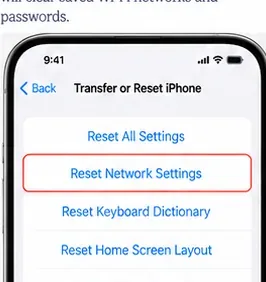
AI-generated illustration of Reset Network Settings, a last-resort troubleshooting step that removes saved network configuration.
Go to Settings > General > Transfer or Reset iPhone > Reset > Reset Network Settings. Apple says this removes saved Wi‑Fi networks and passwords, cellular settings, and VPN/APN settings that are not installed by a configuration profile or mobile-device-management system.
Because this step has a wider impact than forgetting one network, Apple recommends using it only after other solutions fail. On a school or business-managed iPhone, consult IT before resetting network settings.
How to verify the fix instead of relying on one successful reconnect
A stable result should survive normal use, not just a 30-second test. After each meaningful change, reconnect and use the same workload that previously triggered the problem.
Stay connected for at least the period in which the drop normally occurred.
Move through the same rooms if disconnects happened while roaming between mesh access points.
Run a video call or stream that previously exposed the drop.
Lock and unlock the iPhone and confirm that Wi‑Fi reconnects normally.
If you disabled Wi‑Fi 6E mode, verify stability on 5 GHz before changing additional router settings.
After router changes, test more than one Apple device if possible.
When should you stop changing settings and contact support?
If the iPhone 17 Pro disconnects from multiple unrelated Wi‑Fi networks after iOS is current and network settings have been reset, the problem is less likely to be one specific router. Apple’s Wi‑Fi troubleshooting page recommends contacting Apple when the device cannot connect reliably to any Wi‑Fi network.
If only one home network fails and other devices also lose internet access, contact the ISP or router manufacturer. If the iPhone is stable everywhere except one Wi‑Fi 7 router, the strongest evidence points toward that router’s firmware, configuration, or compatibility rather than an iPhone-wide radio failure.
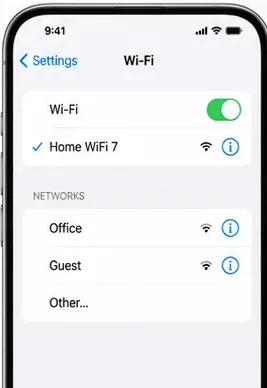
Confirm iPhone 17 Pro is connected to the intended network.
Test the same router with another device and the iPhone on another network.
Install the latest stable iOS update and current router firmware.
Restart Wi‑Fi, the iPhone, router, and modem.
Forget and rejoin the affected network.
If available, turn Wi‑Fi 6E mode off for that Wi‑Fi 7 network and retest.
Use one SSID across 2.4, 5, and 6 GHz.
Use WPA3 Personal or WPA2/WPA3 Transitional security.
Set router channels to Auto and use Apple’s recommended channel widths.
Disable MAC filtering rather than weakening iPhone privacy settings.
Rule out VPN or security software when applicable.
Use Reset Network Settings only after targeted fixes fail.
The most useful 2026-specific test is the new per-network ability to turn off Wi‑Fi 6E mode on a Wi‑Fi 7 connection. If that immediately stabilizes the iPhone 17 Pro, you have a much narrower problem to solve: the 6 GHz path or router configuration. If it changes nothing, the structured steps above help you move from iPhone software to router settings and finally to a full network reset without randomly disabling Wi‑Fi 7 features that Apple officially supports.